
The Q
by Beth Brower
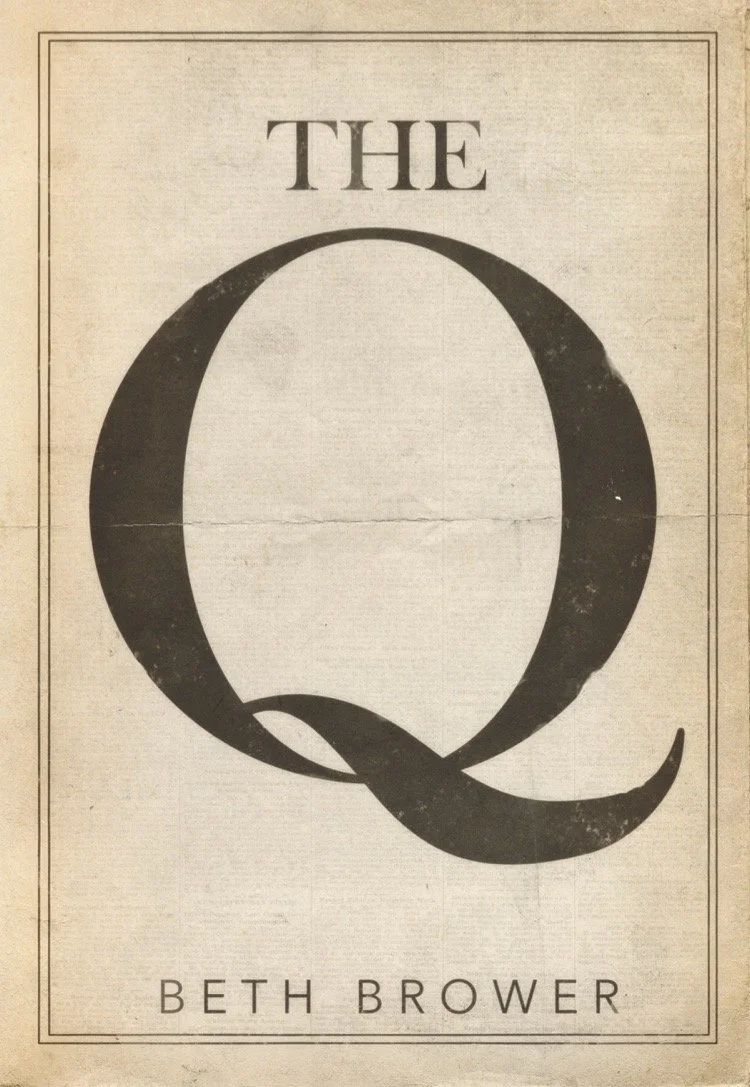
Genre: Historical Fiction
Publication Year: 2016
My Rating: 4.25 / 5
Dates Read: 02/08/2026 - 02/28/2026
Trigger Warnings: Grief, alcohol use, violence, mentions of child abuse and homelessness
Author
Best known for The Unselected Journals of Emma M. Lion series, Beth Brower is an American author whose work is praised for its humor and period charm. Her other published novels include The Beast of Ten and The Books of Imirillia trilogy.
Premise
A young woman in the late 19th century learns that, in order to inherit her uncle’s printing company, she must complete a list of requirements.
Characters: 4/5
The story is character-driven, with a focus on Quincy’s resistance to emotional connection. She pours herself into her work, leaving little time for relationships or personal interests. Living in a small room above the office, she works from morning to night without regret. She views her uncle’s ultimatum as a minor inconvenience in her pursuit of making The Q more profitable, successful, and efficient—three things it arguably already is.
Quincy is unapologetic in her choices and work ethic and feels like a flawed, unique, and deeply human character. She initially comes across as unfeeling, which may make her difficult to connect with. As the story progresses, however, additional layers emerge. Her backstory is gradually revealed, and her growth throughout the narrative is satisfying.
The banter and humor familiar from The Unselected Journals of Emma M. Lion carry over here as well. From quick-witted exchanges to a romance that—much to the delight of the employees—unfolds through anonymous Q submissions, the cast brings a lively, real-world energy to the story.
There support cast adds depth, including Quincy’s loyal employees, a fellow devoted businessman, a charming smuggler (and the constable determined to bring him down), and—of course—James A. Arch. As the solicitor that her uncle appointed to oversee her progress on his requirements, Arch works out of Quincy’s office and follows her around day-to-day. His impatience with Quincy, along with his inherent openness, makes him integral to her growth; gradually pushing her beyond her comfort zone and helping to shape her character arc.
Their dynamic romantically is unique, with Arch as the one who is in tune with his feelings and unafraid in the face of vulnerability. His personal history is revealed throughout, adding depth to the story.
“If she could walk away, she would; her pride demanded at least that much from her. But Quincy knew that her heart beat with the rhythm of the presses in the back room, that her blood ran black with ink, and that her mind filled with reams of numbers and projections and plans. The Q was Quincy’s only vital organ, so she would play the game.”
Setting: 5/5
Set in a fictional European country, Beth Brower has mentioned on her website that easter eggs pertaining to the exact geographical location of the setting are woven throughout the book. With influence from both England and France, the city of Rhydson has fashion and social norms that differ slightly from those typical of late 19th century Europe.
These differences impact the story in a couple of ways. While Quincy’s short hair and wardrobe of tailored suits are viewed as oddities, Rhydson accepts this choice more readily than its real-world counterparts would have. More impactfully, there’s Quincy’s handling of the business. She attends meetings with the board and remains the daily face of the company under her uncle’s ownership. While she does face some scrutiny for her choices, the overall lack of pushback from society highlights the degree of flexibly that Rhydson’s social norms allow.
Complete with a front office, printing room, and a small space where Quincy sleeps, a significant portion of the book takes place at the office of The Q. The intricacies of the printing process are sprinkled throughout the story, making the setting more interesting and highlighting Quincy’s widespread knowledge of the industry. The universe feels lived in, with busy streets, cozy homes, and a London feel.
Plot: 5/5
Concerned about how much of her life she devotes to the company, Quincy’s uncle informs her that—while she will inherit his home and money—his business will only be left to her under certain conditions. While the question of her inheritance drives the plot, the core conflict of the narrative is her emotional journey.
The second half of the story places significant focus on Quincy and Arch’s relationship. As she begins to let him in, she must face her fear of loss and vulnerability. There is plenty of buildup to her development, making her arc feel both satisfying and earned.
The stakes are clear and personal, as Quincy views her loss of The Q as the worst possible outcome. The stakes grow as the story continues and she faces the loss of more than just her business. Subplots are revealed through Quincy’s growing understanding of Arch’s personal history, which adds dimension and enhance the main story.
While more character driven than plot heavy, the narrative remains engaging due to the emotional stakes and clean progression. The ending felt unexpected yet inevitable and left off in a place that perfectly reflects Quincy’s character development.
While Arch’s vulnerability pushes Quincy along her journey and her relationship with cast members change, the story could have been strengthened by more visible growth among supporting characters.
Themes: 5/5
The story’s central idea presses the importance of vulnerability and human connection. At the beginning, we see the way Quincy’s closed off-ness hurts the people around her; she spends little time with her uncle beyond what social obligation demands and appears disinterested in the personal lives of her employees. She eventually acknowledges that her emotional walls are an act of self preservation, and must determine if maintaining her relationships is worth leaving herself open to the risk of being hurt.
Quincy’s growth is well earned as she continues to be challenged by her situation, the people around her, and her evolving feelings toward Arch. The theme is strongly developed, with a satisfying resolution at the end.
“And there it was, the heartbeat she had heard the night of the Fothergils’ ball, pulsing again in the shell of her ear. Quincy closed her eyes from relief. It gave her the same comfort the sound of the press gave her. It was a familiar machine.”
Emotional Impact: 4/5
The payoff was excellent, with strong emotional moments that felt earned and a resolution well-suited to Quincy’s character development. She’s an incredibly frustrating character at times, but this made her growth all the more satisfying. The love between the cast is felt strongly at the end and it was very fulfilling to see the ending come together.
Personal Enjoyment: 4/5
As a lover of both character-driven stories and historical settings, this was a just my type of romance novel. I was so satisfied at the end and grew to care more about the characters that I initially anticipated.
I struggled to connect with Quincy at the beginning of the story because of her unfeeling nature. It didn’t help that I was still trying to fill my Emma M. Lion void (Brower’s series The Unselected Journals of Emma M. Lion), and these two main characters are simply not the same. However, as began to open up I was rooting for her immensely. I couldn’t put the book down in the last quarter, and felt surprisingly emotional as Quincy and Arch worked through their barriers.
I would recommend this to anyone who enjoys character-driven romance and historical settings. This story presents a unique situation that I feel sets it apart from others in the genre. I will definitely continue working through Brower’s backlog (and refreshing her website for Emma announcements).
