
Hamnet
By Maggie O’Farrell
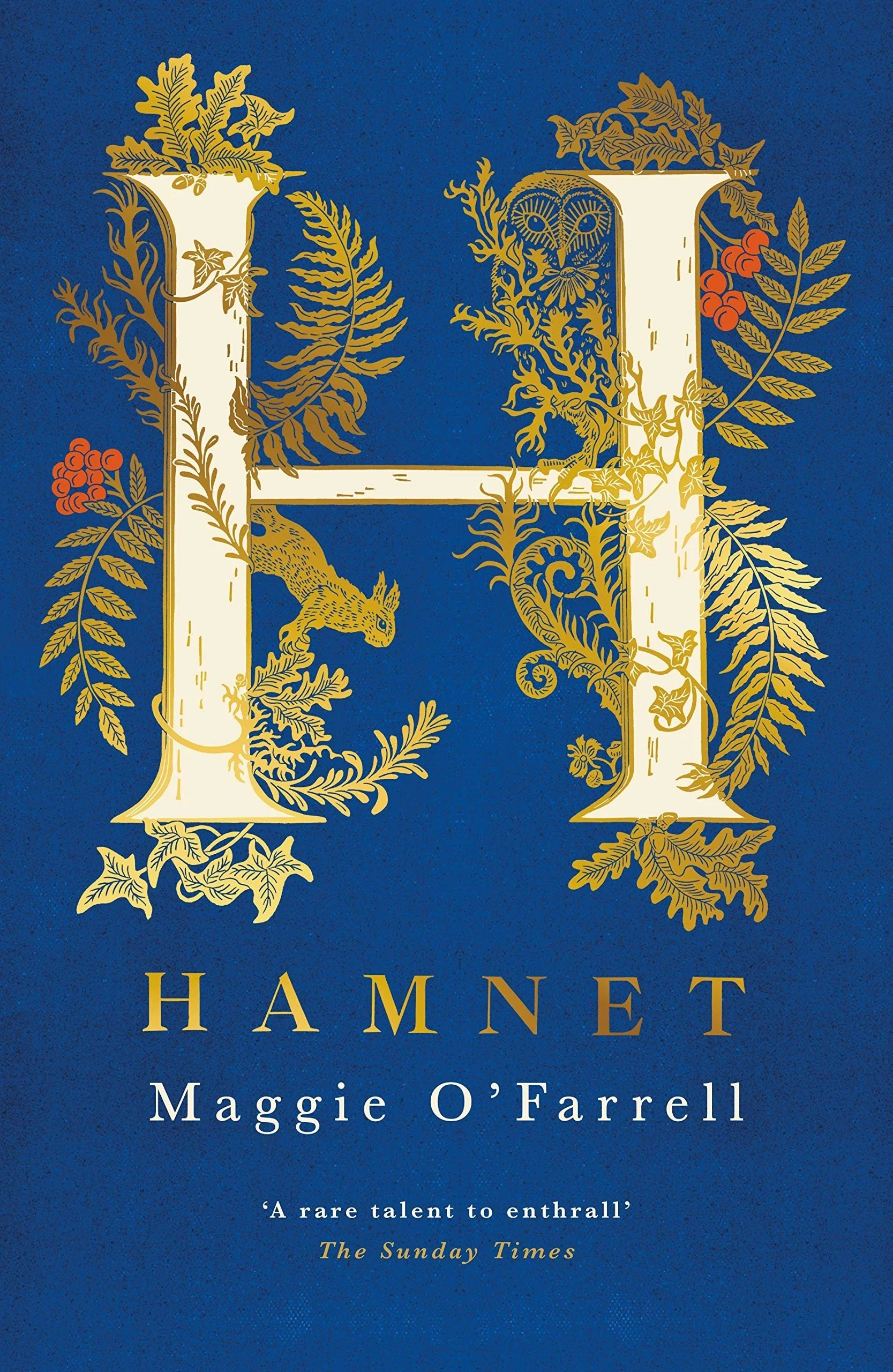
Genre: Literary Fiction / Historical Fiction
Pages: 320 (paperback)
Publication Date: 2020
My Rating: 5 / 5
Dates Read: 12/02/2025 - 12/07/2025
Trigger Warnings: Child illness and death, grief, parental physical and emotional abuse, references to pregnancy and childbirth
Author
Maggie O’Farrell is an Irish-born, British-based author known for her literary fiction that blends history with emotional depth. She is the author of several acclaimed novels, including After You’d Gone, The Vanishing Act of Esme Lennox, and This Must Be the Place. Hamnet, published in 2020, became an international bestseller and won multiple major awards, including the Women’s Prize for Fiction, and was adapted into a film in 2025.
Premise
Hamnet reimagines the family life of William Shakespeare and the death of his only son. Told largely through the perspective of Shakespeare’s wife, Agnes, the novel explores grief, marriage, and motherhood. This story examines the emotional aftermath of loss, displaying how a private tragedy ends up influencing Shakespeare’s Hamlet, one of the most famous works in literary history.
Characters: 5/5
A character study at heart, Hamnet uses Shakespeare’s wife, Agnes, as a lens through which the reader can experience love and loss. There’s no traditional character arc, instead, the novel follows how grief changes her and her life. At the beginning, Agnes is intuitive, independent, and self-assured. She trusts her instincts in raising her children and moves through life with confidence in her choices and understanding of the world.
After Hamnet’s death—a sudden, incomprehensible event—her certainty collapses. As the world continues moving around her, she withdraws from her husband and struggles to re-inhabit a home and a life that feel fundamentally wrong without her son.
Though the story is primarily rooted in Agnes’ mind, it also includes the perspectives of her family and several people around them. Rather than labeled POV sections, the narrative moves organically from one mind to another, often switching mid-scene. These frequent changes give a very well-rounded view of the story and allow even minor characters—like Hamnet’s twin Judith and Shakespeare’s mother—to feel fully realized.
Hamnet also gives subtle but powerful attention to the grief of Judith, whose bond with her brother makes Hamnet’s death feel especially cruel. His father’s physical and emotional distance, on the other hand, highlights how grief is carried differently from one person to another; while Agnes clings to her family, he retreats to work and travel.
Ultimately, the inclusion of multiple perspectives creates a network of emotional resonance. By spreading attention across minds and hearts, the story captures a full, almost cinematic sense of a family and community navigating loss and remembrance.
“Cruelty and devastation wait for you around corners, inside coffers, behind doors: they can leap out at you at any time, like a thief or brigand. The trick is never to let down your guard. Never think you are safe. Never take for granted that your children’s hearts beat, that they sup milk, that they draw breath, that they walk and speak and smile and argue and play. Never for a moment forget they may be gone, snatched from you, in the blink of an eye, borne away from you like thistledown.”
Setting: 5/5
O’Farrell immerses the reader in 16th century England through the daily lives of the characters. Chores, food preparation, and farm work ground the story in the physical realities of the time and make the world feel lived-in.
London is brought to life in a similar way as a setting that contrasts immensely from the family’s rural home. Crowded streets, nudity, noise, and the constant press of people create an atmosphere that is overwhelming and chaotic, especially to a character like Agnes who is experiencing it for the first time.
Plot: 5/5
Opposed to the movie, which takes place chronologically, the book bounces between past and present. The story alternates scenes from William and Agnes’ courtship and early marriage to the family’s current day battle with illness.
This structure means that the tension doesn’t come from wondering what will happen (after all, the major plot beats are shared in the synopsis if not already known from history), but how it will happen and what impact it will have on the characters. The juxtaposition invites readers to consider how love hardens into responsibility, the vulnerability of parenthood, and the loss of peace that comes with painful moments accumulated throughout a lifetime.
Rather than hinging on twists or revelations, the story consists of small, intimate moments—conversations, family dinners, goodbyes and reunions—that create connection over time. These scenes give the reader a deep understanding of the family’s dynamic, which allows the final 1/3 of the book to land with devastating emotional weight.
For a story with a known tragic ending, the structure keeps the story compelling, immersive, and surprisingly suspenseful.
Themes: 5/5
The story positions Shakespeare’s eventual creation of Hamlet as an expression of grief. At first, Agnes struggles to understand her husband’s response to their son’s death. His choice to return to work in London is unthinkable to her, and ultimately his decision to use their son’s name in his writing feels like betrayal. In her grief, it seems as though he’s taken something that belonged only to their family and given up to others, as if meaningless. In experiencing the play’s production, Agnes sees the way his writing has given shape to something otherwise unbearable and comes to recognize it as his own unique way of grieving: an attempt to keep Hamnet alive in another form. What once felt like a betrayal reveals itself as an expression of love, one that allows their son’s name and his memory to live on. This realization reinforces the novel’s understanding that grief is not shared evenly, nor expressed in the same ways, even between people who love one another deeply.
Hamnet also places focus on womanhood, with particular emphasis on pregnancy, birth, motherhood, and child-loss. The book pauses to bring attention to moments like Agnes feeling her baby kick, her birthing experiences, the loss of choice in where and how she labors, and her mother-in-laws jealously that she’ll never again have a baby of her own.
Agnes’ subtle magical abilities, which go unexplained throughout the story, heighten the impact that Hamnet’s death has on her. Her intuitive sense of the future has always given her security and control over her life and, when she fails to foresee this tragedy, her certainty shatters. This underscores a central truth of the novel: no matter how capable we feel, we have little power when it comes to loss.
“And there, by the fire, held in the arms of his mother, in the room in which he learnt to crawl, to eat, to walk, to speak, Hamnet takes his last breath. He draws it in, he lets it out. Then there is silence, stillness. Nothing more.”
Emotional Impact: 5/5
What makes Hamnet devastation isn’t shock value, but the sickening inevitability felt throughout the story. As the characters move through the rhythms of daily life the reader knows what’s coming, but the end result feels no less painful because of it.
Though the tragedy is the focal point of the story, it’s never rushed. The reader is first immersed in the characters’ world: the tenderness and chaos of the children, the dynamic within the household, the undercurrent of love binding the family together. When Hamnet dies, you’re not experiencing a plot twist, but grieving the loss of someone that feels painfully real.
The death scene is handled with delicacy; the moment didn't need to be dramatized to convey its weight. Instead, it was quiet, painful, and hauntingly real.
The ending doesn't leave you with resolution—how could it?— but it does leave behind the brittle comfort that grief can be transformed into something eternal.
Personal Enjoyment: 5/5
While I tend to rate the books that I read quite highly (a fact that I proudly attribute to my ability to know my taste), I certainly don’t hand out five star ratings on a whim.
I can understand why some readers may find this book to be overwritten; the prose is overloaded with adjectives and sensory detail. Personally, I found the writing style to be beautiful. The language felt intentional and immersive rather than excessive, and drew me deeper into the atmosphere of the story.
I listened to this on Audible and the narration elevated the experience even more. Ell Potter’s voice suited the novel perfectly, with a quiet gravity that accentuated the emotional undercurrent of the story. I was pulled in instantly and rarely wanted to step away, even though I often have difficulty wanting to return to books that I know will be emotionally heavy. If I were giving advise on how best to enjoy the story, I’d suggest slowing down and allowing the poetic quality of the writing to sit with you (something that would likely be easiest when listening rather than reading).
For me, Hamnet was perfect, with lyrical writing, emotional depth, and a story that will be remembered long after the final page.
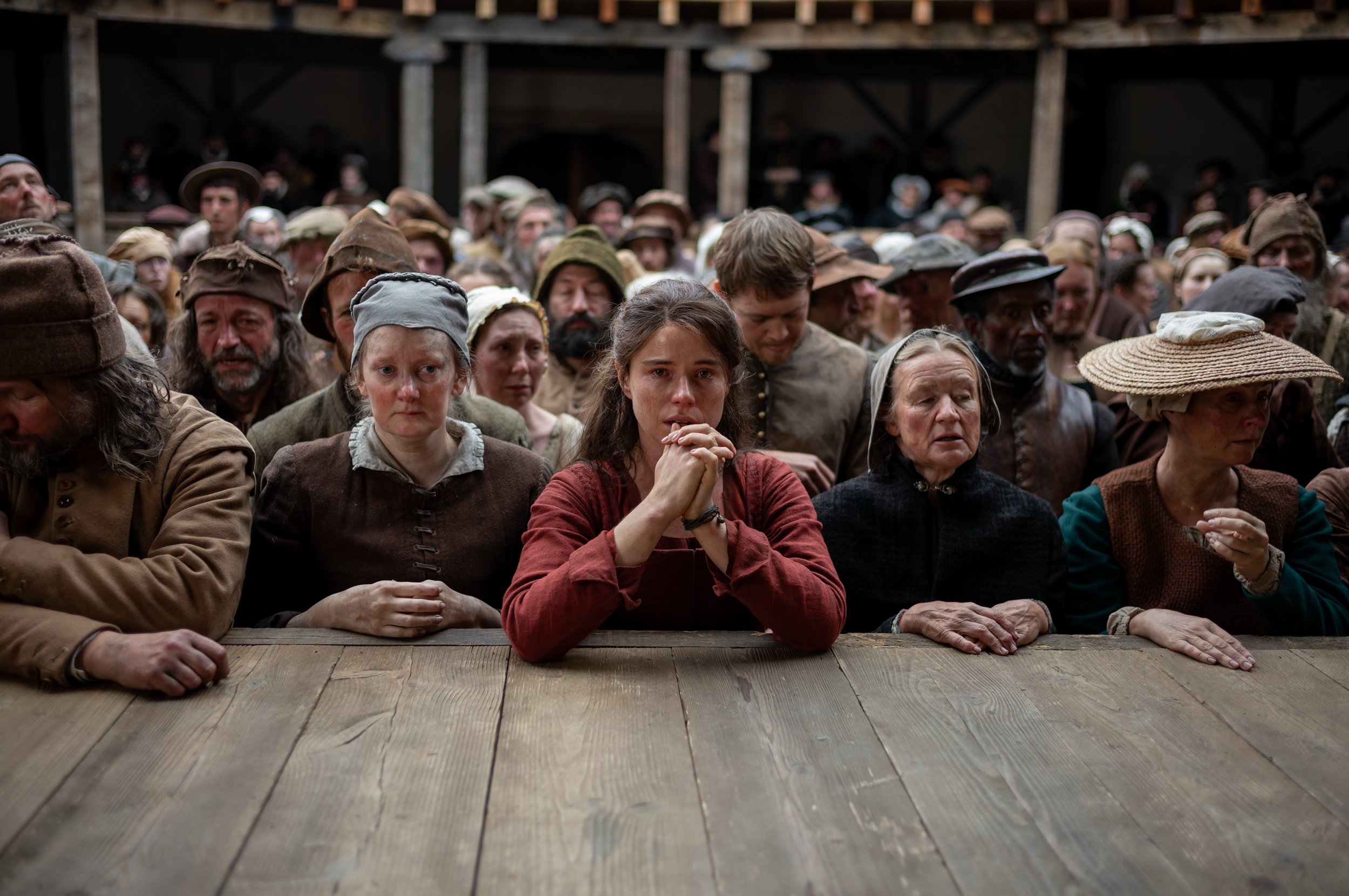
Jesse Buckley was incredible in the adaptation.
For this performance she received the 2026 Critic’s Choice Award for Best Actress it was definitely well-deserved.
I loved the movie… and will probably never watch it again (I was traumatized). The performances were beautiful across the board, especially Jesse Buckley (Agnes), Paul Mescal (William Shakespeare), and Jacobi Jupe, whose performance as Hamnet was so convincing that it was genuinely difficult to sit through.
The adaptation also added in some new elements that improved the story, such as the burial of the hawk. I do think that the death scene lost some of the book’s quiet nuance. Overall, though, I loved both the film and the novel. Each approached the grief at the heart of the story in its own way, and both left a lasting impression.
