January Debrief
Biblical allegories, televised romance, and other stories that commenced the year.

Sipping tea as I write this, though it’s decidedly less charming than this English Breakfast I enjoyed in Oxford.
With a superb start to my reading year, I find myself suspended between two equally compelling sentiments: the optimistic conviction that surely this heralds a glorious literary year, and the more familiar assumption that the only direction from here is down. I tend to be most secure in the latter. After all, it’s difficult to disappoint oneself when expectations are set so securely subterranean.
This particular tendency can be attributed to my family’s longstanding relationship with improbable misfortune—a phenomenon lovingly coined “The Feldner Factor.” This tragically genetic affliction all but guarantees a lifelong proclivity for the mediocre, accompanied by the occasional small disaster (never catastrophic enough to warrant a memoir, but always containing the proper amount of inconvenience to hold us back from what would otherwise, doubtless, be greatness).
I would worry that my attempts at humor here will miss the landing were my single audience member not known to me personally.
Hey, Dad. Per your appreciated (though solicited) feedback, I will make an earnest attempt to keep the cursing to a minimum.
Despite overwhelming evidence that the Feldner Factor spares no realm—literary or otherwise—my year has begun so auspiciously that, while my five-year plan remains neither drafted nor conceived, my book month demands a full accounting! Time is of the essence, lest my ill luck present itself in the form of a well-timed hit to my temporal lobe, vanquishing a month’s worth of reading. Thus, for posterity—and for the Feldner family archives—I present my findings below:
Matters of the Page
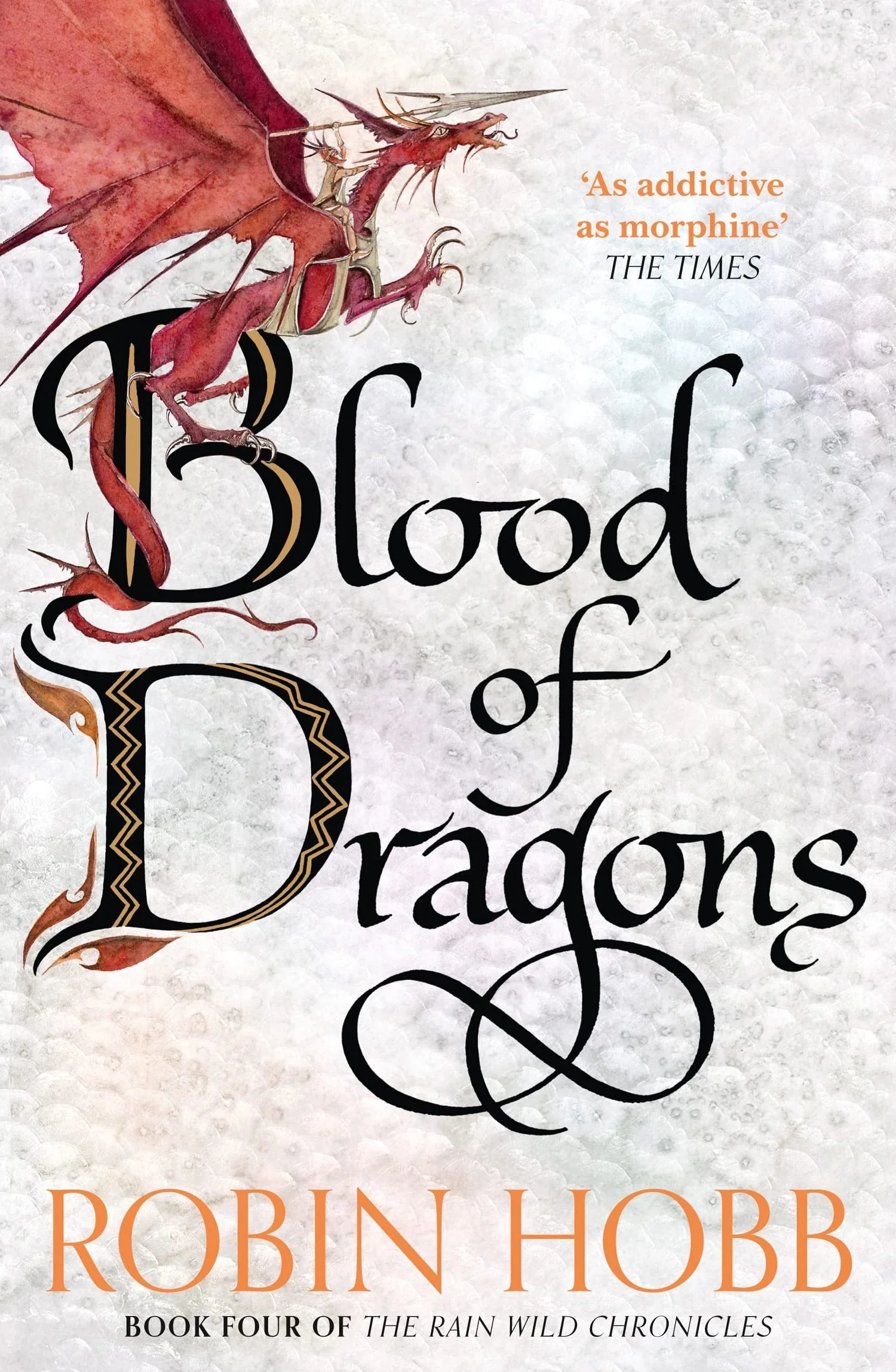
Completing The Rain Wild Chronicles—a sub-series within Robin Hobb’s 16-book The Realm of the Elderlings—I finished City of Dragons (Book 3) and Blood of Dragons (Book 4).
This quartet gives some much-needed context to the Rain Wilds, a territory referenced throughout the series with little explanation regarding its unique people or odd customs. These books are more relationship-focused than the other volumes in the series, with a lot of emphasis on the emotional development of the characters.
City of Dragons was not particularly satisfying on its own, with Blood of Dragons serving as its resolution. The case was the same with the first two books in the quartet, which makes the overall structure feel somewhat fragmented. Nonetheless, it’s no surprise that I enjoyed these.
While I don’t think The Rain Wild Chronicles comprises the strongest installments within the full series, I still rated even the lowest book above four stars. As I move on to the final trilogy in The Realm of the Elderlings, I’m so excited to see all these sets of characters come together to complete the story (well, as excited as one can be as they march to their own demise).
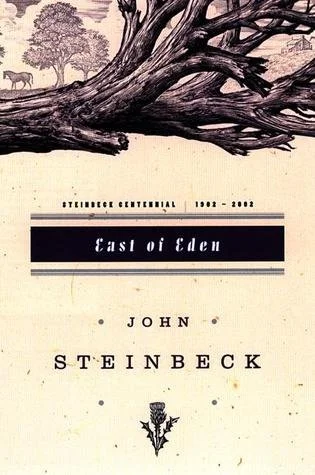
In line with my 2026 intentions to (1) read more classics and (2) watch more adaptations, John Steinbeck’s 1952 East of Eden seemed like the perfect way to commence the year.
Inspired by the biblical story of Cain and Abel, this multi-generational novel follows the Hamilton and Trask families in California’s Salinas Valley. As rivalries and resentments repeat across generations, the novel questions whether individuals are irrevocably bound by their nature and lineage.
Narrated by a descendant of one of the main characters, the novel features immersive world building and an expansive cast. Yet this novel is known less for its plot than for its philosophical ambition, which questions the choice between good and evil, asking in particular if humans are destined to repeat the sins of their family.
While I did enjoy the story overall, I found myself at odds with its execution. The plot often meanders, pausing for philosophical reflection or explanation in ways that slowed momentum. Because the story stretches across decades, individual scenes sometimes feel more illustrative than emotionally grounded, as though they exist to serve the novel’s ideas rather than to deepen character relationships.
This distance extends to the characters
themselves. At times the characters felt constructed to serve the story thematically rather than to exist as a fully realized individuals. As a result, the story was not as emotionally impactful as it had the potential to be.
Overall East of Eden left me with much to admire and reflect upon, even if I did not connect with it on the visceral level that its reputation often suggests. I’ll link my full review here as soon as it’s uploaded.
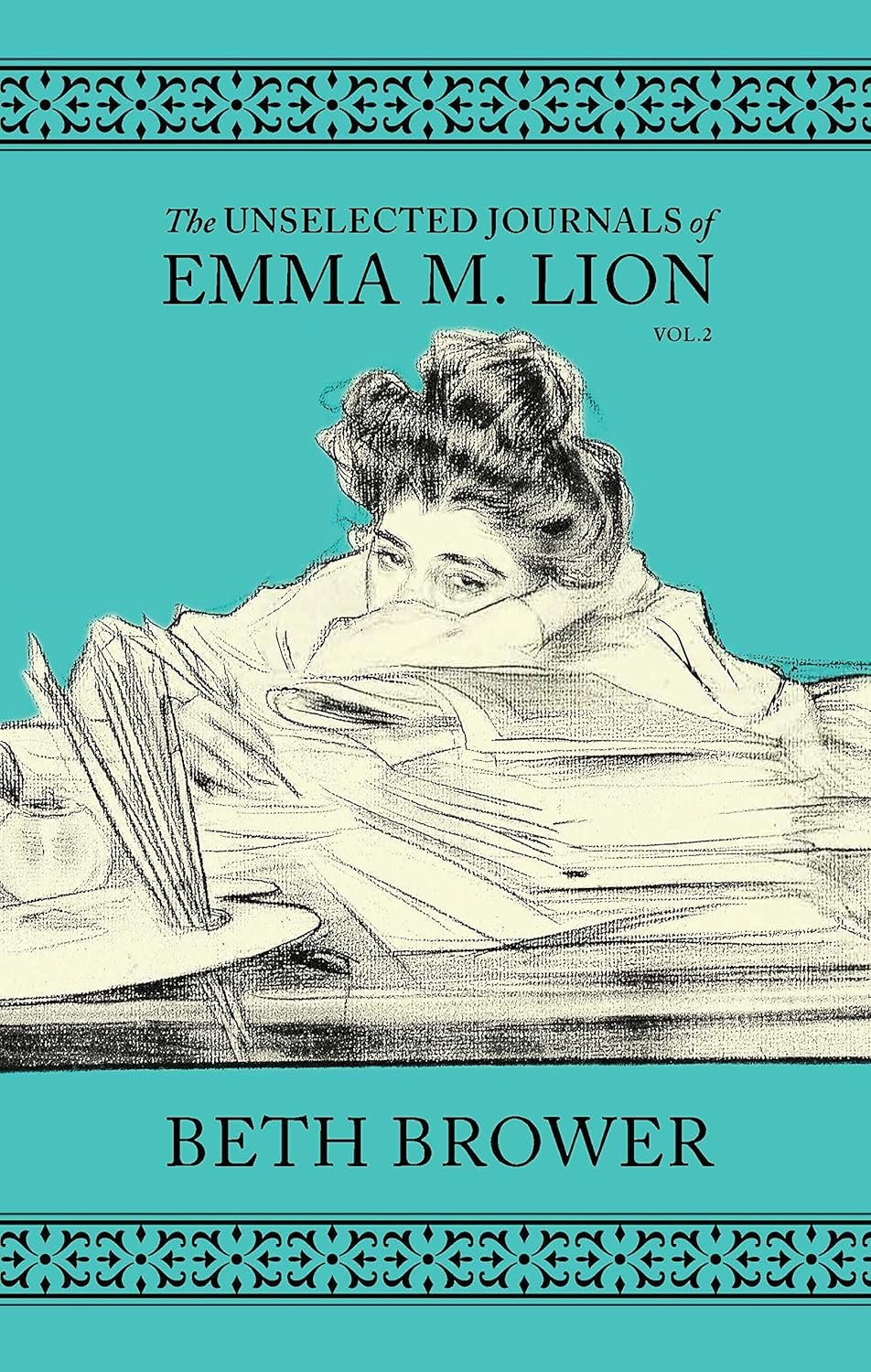
This series was such a wonderful surprise! So wonderful, in fact, that I accidentally read seven in one month. In my defense, they’re short, okay?!
Written as journal entries, The Unselected Journals of Emma M. Lion follows a young woman in the late 17th century as she takes up residence in the delightfully odd London neighborhood of St. Crispian’s. What follows is a series of social missteps and small catastrophes rendered hilarious by Emma’s quick wit and quicker pen.
I was swept into her world as she attempts to navigate social tact, fend off unexpected visitors, and wriggle out of small disasters (many of her own making).
Emma has become one of my most beloved characters, thanks not only to her voice but to the wonderfully eccentric group of friends she collects along the way. From dukes and vicars to photographers and painters, the whole cast adds warmth, banter, and heart, making St. Crispian’s a place I never wanted to leave.
With the stakes growing higher throughout with each book, I’m anxious to keep reading. Though a delightfully numerous 20 books is planned for the series, I’m now on to the last released volume. As Miss Lion would say, I weep.
Matters of the Screen
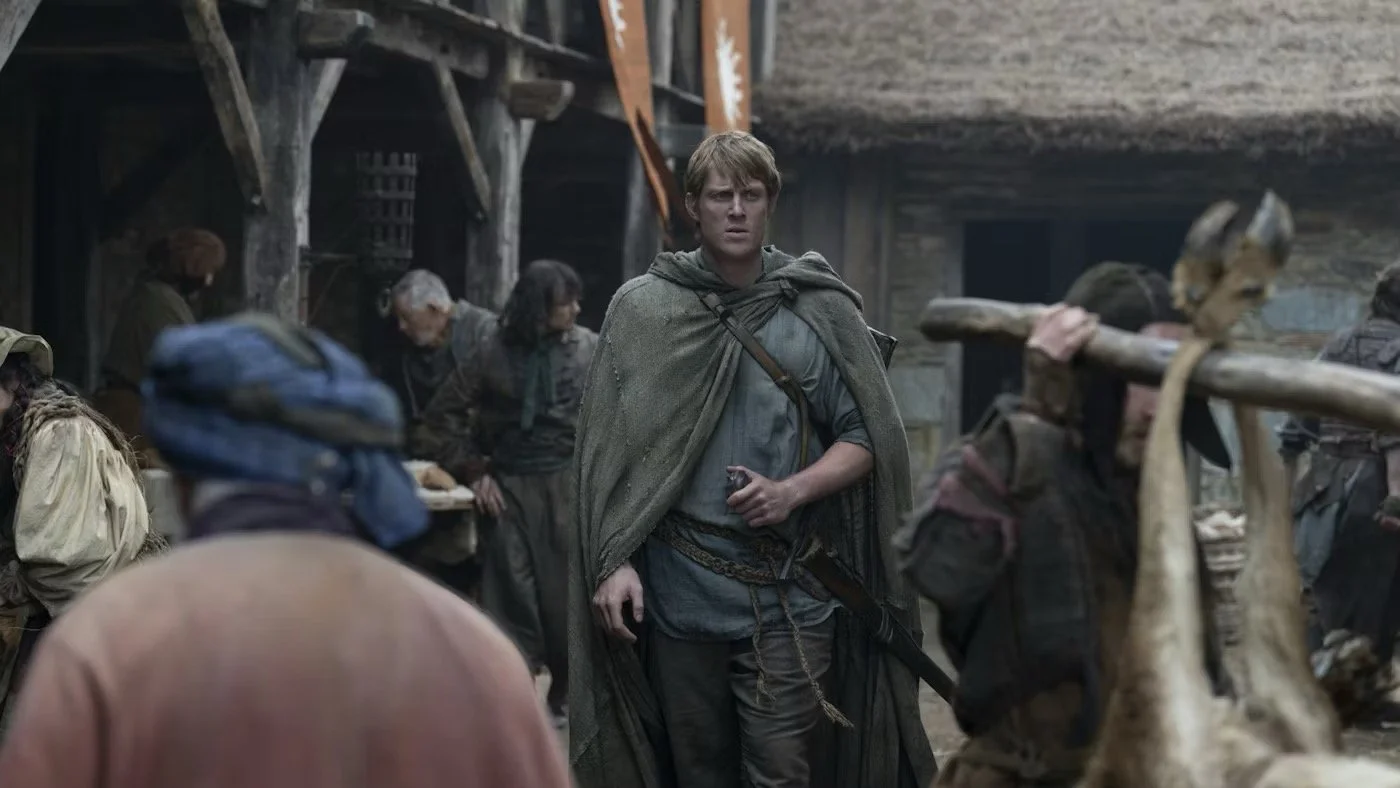
As I’m writing this a few days into February, I’ve been able to watch three episodes of A Knight of the Seven Kingdoms, which began airing on HBO mid-January.
Based on George R.R. Martin’s Tales of Dunk and Egg—a series of novella’s set within the Game of Thrones Universe—this is smaller-scale story that still contains the lore and world building that so many of us know and love.
I’m really enjoying the show so far, especially the dynamic the two main characters! It’s fun to see the descendants of the many known houses and the quality is, of course, superb.
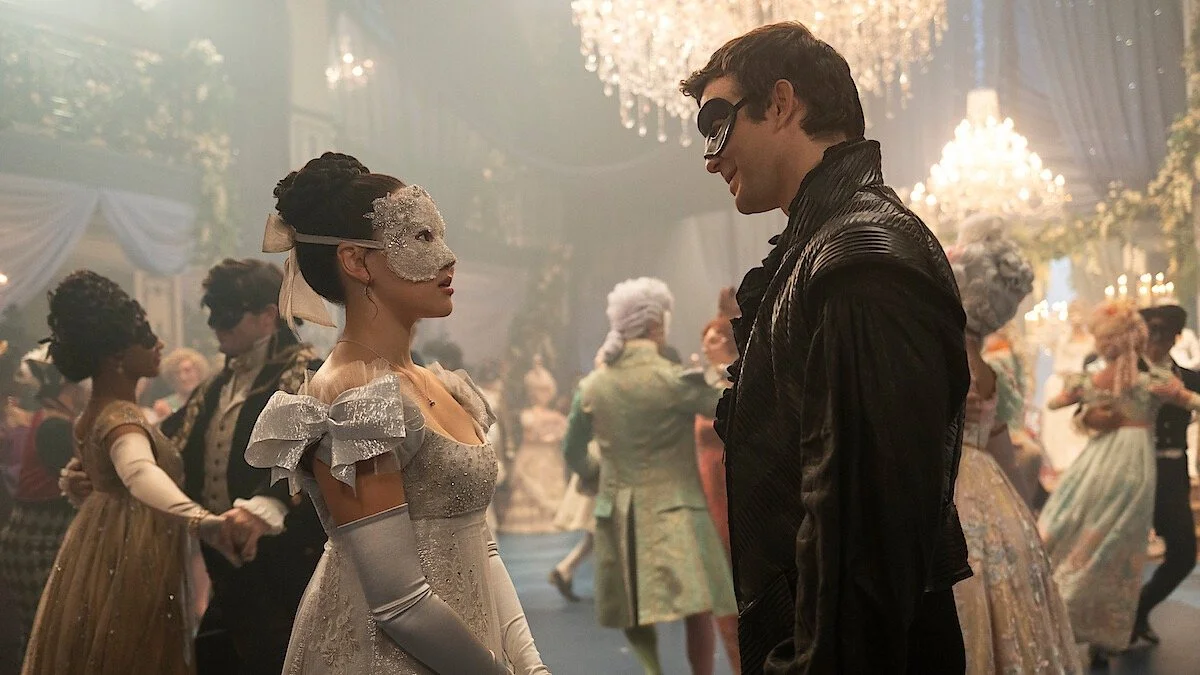
The first four episodes of Bridgerton season 4 aired on the 29th. This season focuses on Benedict and Sophie, who meet at a masquerade ball held at Bridgerton house.
After some strong disappointment in last season, I’m feeling mostly… meh. This fact I unabashedly blame on the show runner who took over starting last season, introducing smokey eyes, almond-shaped acrylics, and enough sub-plot to bury the main storyline.
My main complaints about this season in no particular order:
The way Benedict’s character was set up in contrast to the story now trying being told. An egregious amount of screen time was used last season to firmly establish him as being more interested in casual sex than the ladies of the ton. This makes his near-instant obsession with Sophie after seeing half her damn face a mere glimpse of her face at the ball feel unlikely. A fact that brings be directly to complaint number two.
Benedict fails to recognize Sophie without her mask—something I could overlook, were there more than one Asian household within London’s court-adjacent society. In the book two years had passed before he saw her again, and I similar timeline in the show would make this so much more valid.
Sophie leaves her new employers house without any possessions right after a previous scene was spent showing her take the time to pack before leaving her home.
I have many more thoughts, but will exercise what little restraint I possess until after part two.
I’m very excited for February, which will hopefully include the following:
A reunion with my dear Fitz as I begin the last books in The Realm of the Elderlings. If no one hears from me, I’m likely suffering in some sort of dignified undignified fashion.
A dramatically well-rounded undertaking of Wuthering Heights, including the book and multiple movies (the new one comes out February 13 - read about it here).
The fourth book in Pierce Brown’s Red Rising Saga, to be approached with both steeled heart and willfully naive optimism.
Glad as I am to have this typed up in its entirety, I’m certain some unforeseen circumstance will prevail before I press publish. Nonetheless, here’s to another month of reading and trying not to disgrace the family name, harbinger of misfortune though it is. Thanks for reading!
